01 — The problem
The lag between readings
ICU patients on nicardipine need their blood pressure held inside a narrow window. In practice a nurse measures, adjusts the infusion rate, waits, and measures again. The lag between those steps is where the patient drifts out of range, and the workload scales badly across a ward.
02 — What we built
Cuff, pump, and the software between them
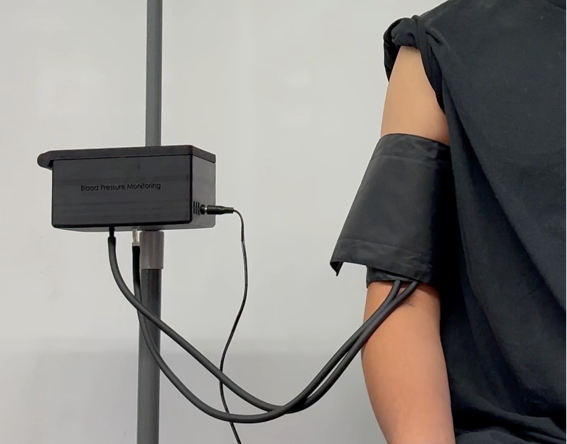
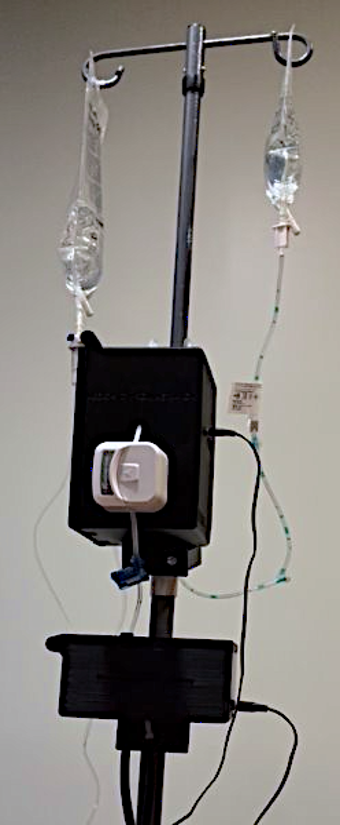
Three of us built the whole thing from nothing: a non-invasive oscillometric cuff for continuous monitoring, a peristaltic pump for nicardipine delivery, and the software connecting them. I designed and built the CAD and hardware for both devices, and owned the software stack across Python, C++ and MATLAB.
The control side models how an individual patient responds to a dose rather than applying a fixed schedule, using machine learning over the measured response. Around that sit real-time signal processing on the cuff waveform, an encrypted wireless link between the devices, and a clinician application that holds final authority over dosing — the loop is deliberately semi-automated, not autonomous.
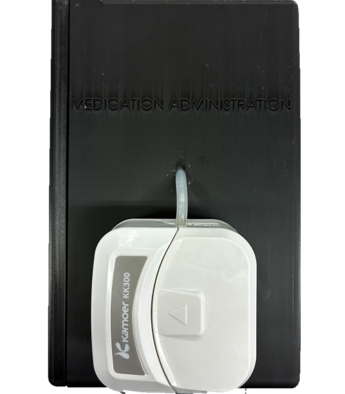
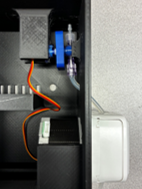
03 — Designing inside the standards
Hazard analysis as a design input
This was the project where regulatory work stopped being abstract. ISO 14971 risk management ran alongside the design rather than after it, ISO 81060-2 set what the cuff had to demonstrate, and IEC 60601-2-24 governed the infusion side. Working that way changes what you build: several design choices exist because a hazard analysis asked for them, not because they were the neatest engineering answer.
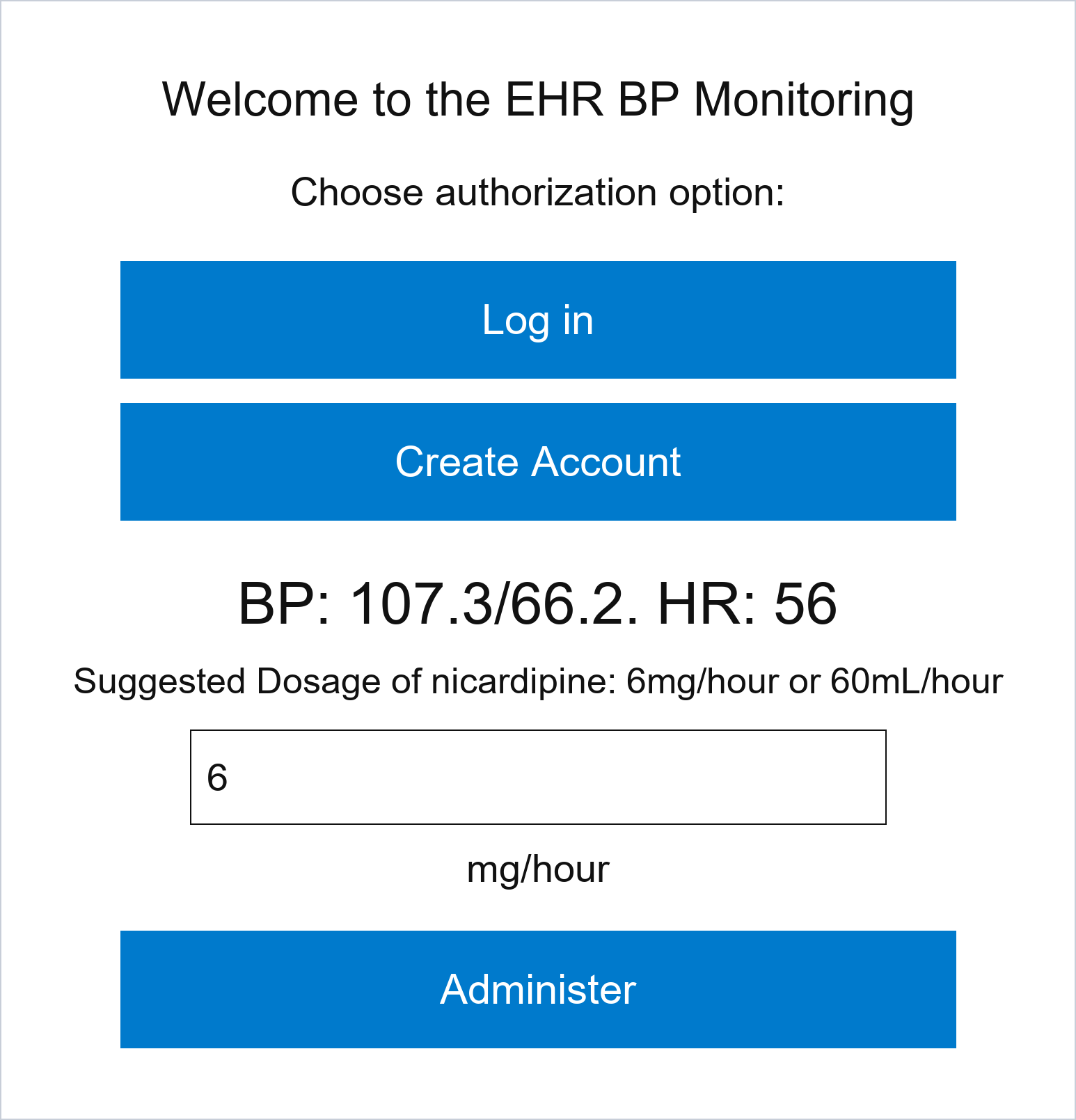
The clinician application is the clearest example. It surfaces the computed pressure, heart rate and a suggested nicardipine rate, but the dose is never applied until a clinician commits it.
04 — Validation
Getting a student build to human testing
We took the cuff through IRB-approved testing on human subjects, which meant the protocol, the consent process and the data handling all had to hold up before a single measurement was taken. Getting a student-built device to that point was most of the work.
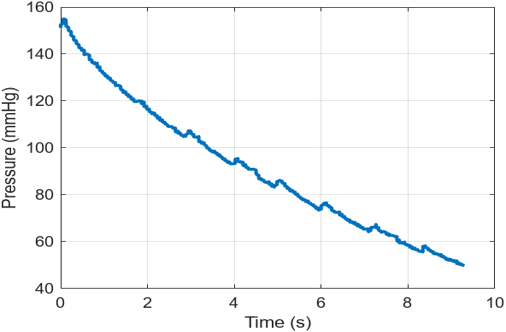
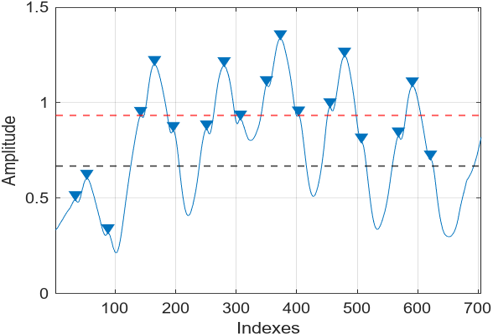
Blood pressure is recovered from the cuff deflation curve: the pressure trace is bandpass filtered to isolate the oscillometric pulses, and systolic and diastolic values are read off fixed ratios of the peak envelope.